A Survivor’s Story
Restoring Me Retreats: a beacon of hope
My name is Norma, and for several years now, I have been participating in the Restoring Me Healing Retreats. I first learned about these retreats through an announcement in my parish bulletin. It caught my attention because I am a survivor of sexual abuse; after consulting with my Spiritual Director, I decided to call for more information and ultimately made the decision to attend the retreat.
It was not easy to summon the courage to attend the retreat—or to accept the painful situation I was enduring due to the trauma and the wounds the abuse had left within me. In these retreats, I have found a safe and confidential space where I have been able to encounter God, myself, and all my wounds—and to realize that He desires to heal my wounds and walk alongside me, just as He does with every single person who participates in these retreats.
For me, the abuse was like an earthquake that strikes and destroys everything in its path. It destroyed my joy, my peace, my sense of safety, my will to live, my trust in others, and even my relationship with God—for I could not comprehend how a God who loves me could allow such a thing to happen to me when I was so small.
Here, however, I have learned to understand how the abuse has impacted my life and my relationships with others; I have learned to heal hand-in-hand with God, realizing that He is the One who desires my healing most of all.
I had previously attended other retreats where these wounds were addressed only superficially. But at Restoring Me I learned to know myself more deeply; I came to realize the true magnitude of the damage the abuse had inflicted upon me and, crucially, I learned how to heal.
Simply listening to the other participants brings healing, and the accompaniment and guidance provided by the retreat facilitators serve as a vital support system that empowers me to keep moving forward. I’ve come to understand that healing is not accomplished in a single retreat; rather, it is a continuous process of uncovering each individual wound and allowing God to heal it. For me, the Restoring Me retreats are a beacon of hope amidst the darkness, and the support team has been like a walking staff— a steady support I can lean on as I continue my journey forward.
About Restoring Me Retreats
Restoring Me is a Catholic retreat program of the Diocese of San Bernardino consisting of a series of one-day healing retreats for anyone who has suffered neglect, physical, sexual, emotional, or spiritual abuse. The retreats are focused on the restoration of the dignity and identity of the person, created in the image and likeness of God.
The purpose of Restoring Me retreats is to provide a Christ-centered, Catholic faith-based healing environment, where participants feel welcomed, listened to, accompanied, know that they are not alone, and can share their personal experiences in a safe, sacred, and confidential setting.
2026 Restoring Me Retreat Dates: April 11 - Jesus calms the storm; May 9 - Healing through the Beatitudes. Location: Bishop Barnes Newman Center, 2574 Kendall Dr, San Bernardino, CA 92407. Time: 8:30 a.m. - 5 p.m. Retreats include materials, light breakfast, and lunch. Restoring Me Retreats have no cost, donations are welcomed. For more information, contact This email address is being protected from spambots. You need JavaScript enabled to view it. or 909-475-5129
How we can be a Trauma-Informed Church
By Elder Samaniego
I was in my late twenties, serving as the lay coordinator for my parish prayer group. One evening, as I rushed through instructions for our fellow leaders, Mary approached me. It was about 6:30 p.m. and already getting dark, yet Mary was wearing sunglasses.
Curious, I asked her, “What’s with the sunglasses?”
She slowly and hesitantly removed them, revealing eyes that were red and bruised. Startled, I asked what had happened. With a broken voice and tears in her eyes, she replied, “Someone tried to rape me last night as I was walking home.”
As the coordinator, I felt a sudden weight of responsibility. Mary had come to me for support—perhaps even for a sense of safety—and I was paralyzed. I struggled to find the right words, but inside, I emotionally shut down. The discomfort was overwhelming. When Mary explained she had already reported the incident to the police but simply needed to talk, I took the “safe” way out: I suggested she make an appointment with the pastor, promised to keep her in my prayers, and left her standing there.
At the time, I felt a sense of relief, convinced I had done all I could. Today, I look back with a heavy heart. I wish I could go back in time and truly be there for Mary—to be fully present, to listen with empathy, and to walk with her toward the professional help she deserved.
Understanding the “Invisible Wounds”
My experience with Mary taught me that we live in a time when many carry “invisible wounds.” Experts call this trauma. Whether stemming from childhood adversity, loss, violence, or even past hurts within the Church, itself, these wounds change how we perceive the world, how we relate to others, and how we experience God.
According to mental health professionals, trauma is defined by how an event—or a series of events—overwhelms a person’s ability to cope, leaving a lasting imprint on their mind, body, and spirit. It is often understood through the “Three Es”:
The Event: The actual incident or circumstance.
The Experience: How the individual perceives and internalizes the event.
The Effect: The long-term impact on the person’s nervous system and soul.
Trauma is not just a historical footnote in a person’s life; it becomes a living part of their story, present in their daily reality.
The Shift: From Judgment to Empathy
To be “trauma-informed” is to lead with empathy. It requires shifting our fundamental question from “What is wrong with this person?” to “What has happened to this person?” This simple shift in perspective creates a culture of a welcoming sanctuary rather than judgment.
In a Catholic context, becoming a trauma-informed Church is not about replacing theology with psychology. Rather, it is about reclaiming the healing accompaniment of Jesus. In the Gospel of John, the resurrected Christ returns to the Upper Room and does something profound: He shows His wounds. Jesus does not hide the marks of His human suffering and trauma; instead, He uses them as a bridge to connection, faith, and hope. In our parishes and ministries, people come to us just as Jesus did—bearing their own wounds. How do we respond?
Reverence and Respect
Being a trauma-informed Church requires two movements of the heart:
Mindfulness of Dignity: Recognizing every person as a beloved child of God.
Mindfulness of Reverence and Mystery: Treating every person with reverence and respect. Reverence, because each human being is created in the image and likeness of God; and Respect, because the heart of every person is a sacred mystery we must enter with care.
A trauma-informed Church does not shy away from the Cross. Instead, we are called to stand at the foot of it alongside those who suffer, offering the same compassion we ourselves have received from the Lord. When we lead with empathy, we become a living icon of the Divine Physician—the “Broken Healer” who brings life out of death and grace out of grief.
Bring awareness to child abuse prevention this April
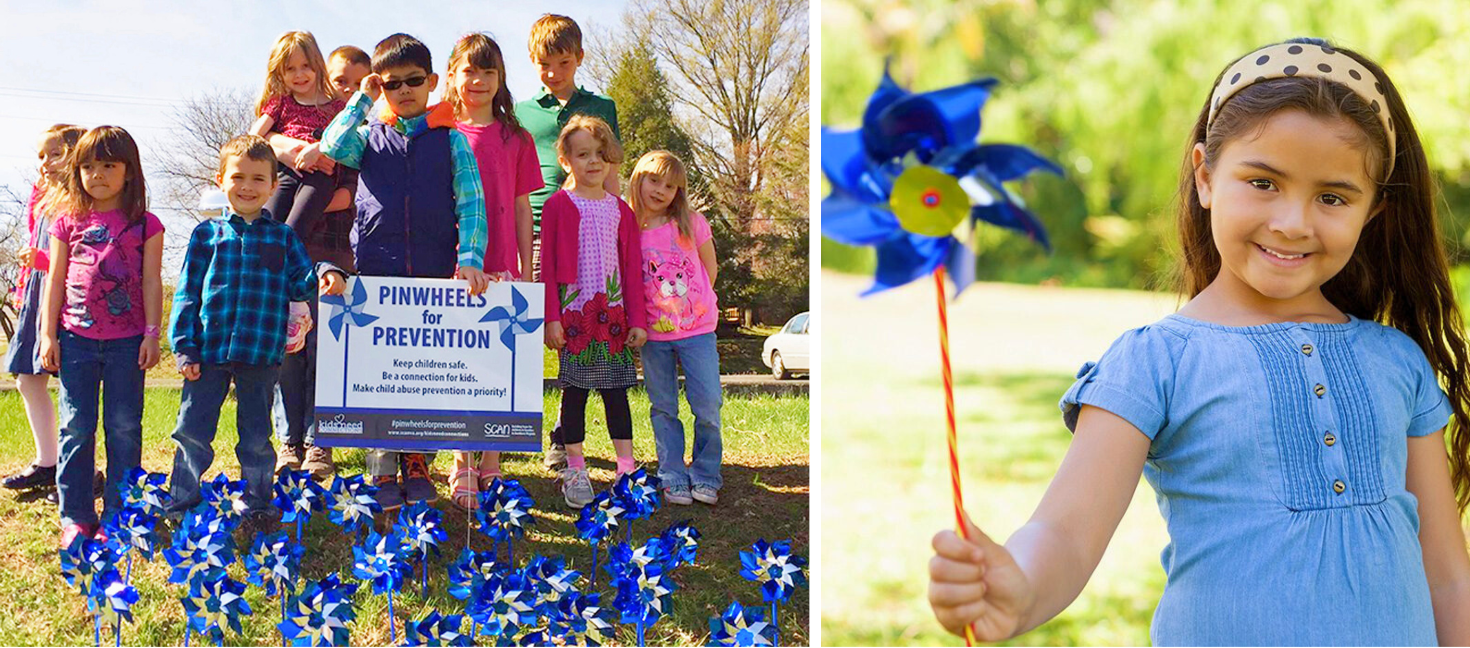
In observance of April as Child Abuse Prevention Month, the Office of Child and Youth Protection has created a 2026 Toolkit. This useful resource is meant to help parishes and schools plan and prepare for Child Abuse Prevention Month. The contents can assist parishes and Catholic schools, as well as families, bring awareness to child abuse prevention. The view the complete toolkit please visit: April Toolkit | docyp
In this month of April, let us renew our personal and diocesan commitment to protect children, youth, and vulnerable adults from all matters related to abuse. April is National Child Abuse Prevention Month in the U.S. but every month is child abuse prevention month in the Diocese of San Bernardino!
Let’s Make Blue Pinwheels
In 2008, Prevent Child Abuse America® introduced the blue pinwheel as the national symbol for child abuse prevention. Because by its very nature, the pinwheel connotes playfulness, joy, and childhood, it has come to serve as a physical reminder of the great childhoods we want for all children.
Activity
Help create awareness by teaching your kids or students how to make blue pinwheels. Remind children that God created them to be happy, healthy, and safe.
Let’s Make Blue Pinwheel Gardens
The Office of Child and Youth Protection encourages parishes and schools to create Blue Pinwheel Gardens to:
Remind children that God created them to be happy, healthy, and safe.
Activity
Teach children that if anyone makes them feel scared, uncomfortable, or confused, they have the right to Say ‘No,’ Get Away or Tell A Trusted Adult, and It Is Never Their Fault!
Start a conversation with students, parents, and staff on child abuse prevention.
2025 Safe Environment Compliance data collection report
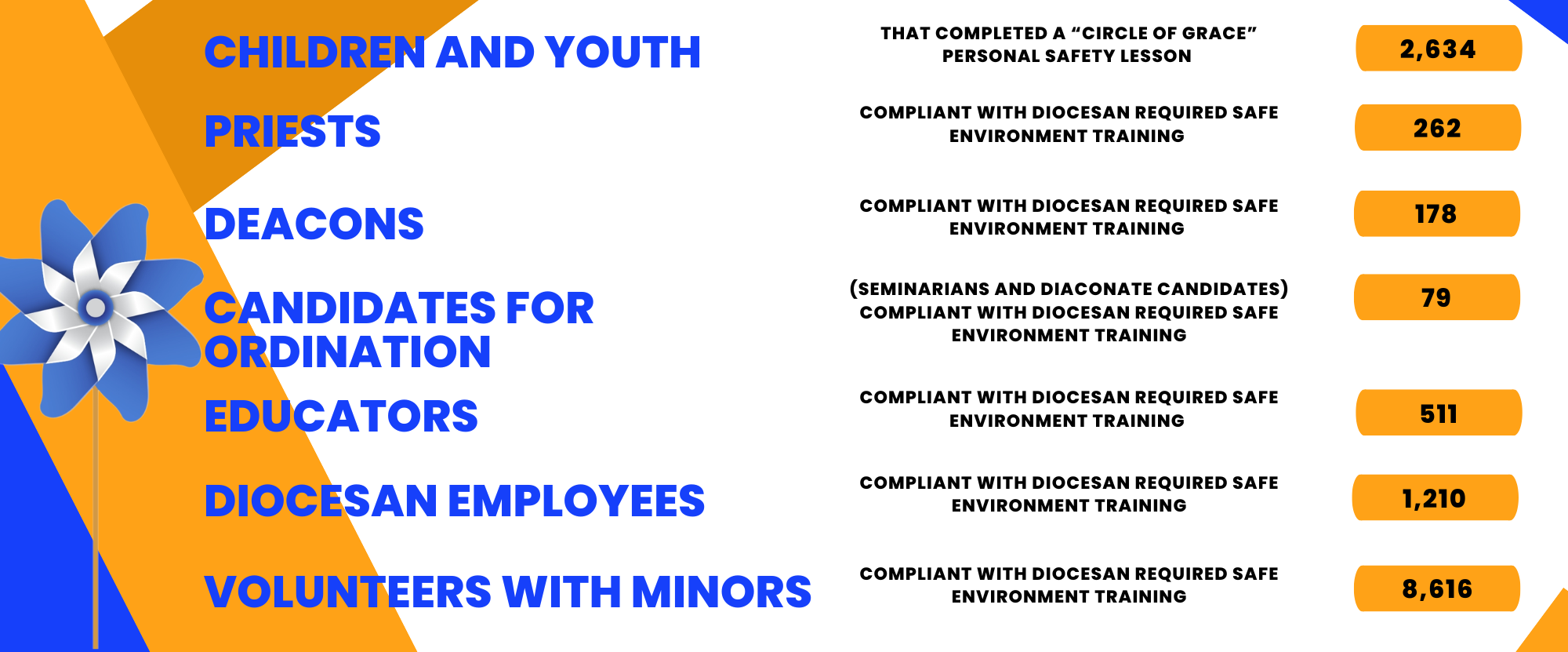
The graphic depicts the 2025 Safe Environment Compliance data collection report of the Diocese of San Bernardino that was sent to the United States Conference of Catholic Bishops (USCCB). The roles mentioned above (except for minors) are required, per diocesan safe environment policy, to undergo a California Department of Justice and FBI background check.
Elder Samaniego is the Director of the Office of Child and Youth Protection for the Diocese of San Bernardino.